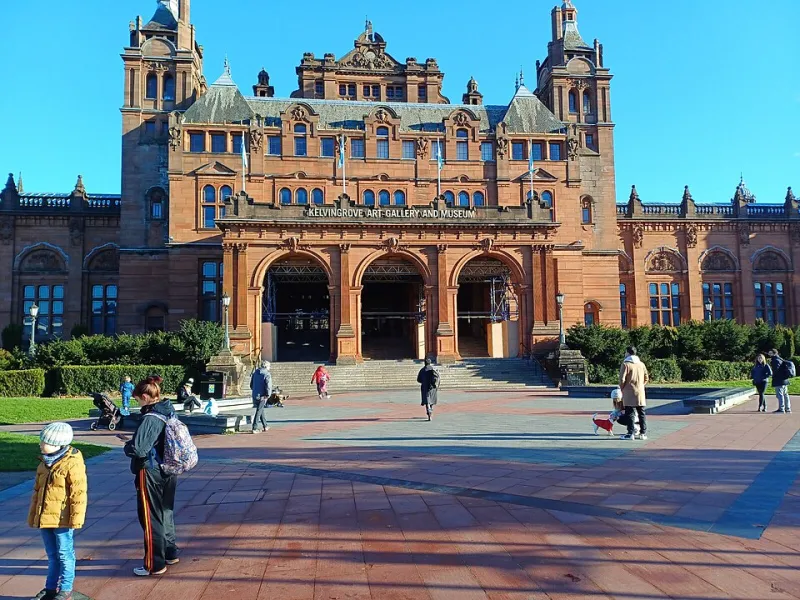
Room Enough for Slow Looking: Why Britain's Civic Galleries Make the Better Weekend
Photo: Diego Torres Silvestre from Sao Paulo, Brazil, CC BY 2.0, via Wikimedia Commons
Here is an argument I have been making, patiently and at length, to anyone who will listen: the blockbuster exhibition is the least interesting thing about an art weekend. The queue, the timed slot, the twenty-two quid, the shuffle-past choreography that turns looking at paintings into a form of traffic management. You arrive having spent three months looking forward to it and leave ninety minutes later having mainly looked at the back of a stranger's head.
The alternative is sitting, free, in a municipal gallery in a town you probably haven't thought about since a school trip. It is quieter, it is stranger, and in 2026 it is very often the better weekend.
The civic collection is a different animal
A national museum is assembled by committee and curators with budgets. A civic collection is assembled by accident, stubbornness and generosity. It's the textile magnate who left his Victorian pictures to the town that made his money. It's the watercolours given because the family didn't want them and the gallery had a wall. It's the one truly odd purchase made by a curator in 1963 that nobody has ever quite known what to do with.
That's what makes them rewarding. You aren't being told what to think by an audio guide; you're reading a room built out of a specific place's taste and history, and the room is empty. You can go round twice. You can sit down in front of something unfashionable for twenty minutes. You can come back after lunch and see it differently, which is not a thing you can do with a ticketed show.
Four rooms worth the train fare
The Harris, Preston
Reopened in 2025 after a long refurbishment, and the result is one of the most pleasant free afternoons in the north-west: a proper Victorian library upstairs, a light-filled gallery below, and a collection that moves from polished nineteenth-century British painting to local history without any obvious embarrassment about the join. The strength is the depth of the Victorian holdings — the sort of thing a prosperous cotton town acquired while it had money — hung in rooms that still feel like they were built for looking rather than for circulation.
Where to stay: there's a cluster of small guesthouses and B&Bs within a ten-minute walk of the Harris and the train station. Look for something on or just off Fishergate and you can do the whole weekend on foot.
The Grundy Art Gallery, Blackpool
A tight, elegant Edwardian gallery a few streets back from the promenade, built on a Victorian bequest and now running a genuinely curious programme that sets contemporary work against the historic collection rather than hiding it. It's small enough to see properly in an hour and good enough to justify two visits. Free, as all of these are.
Where to stay: Blackpool's accommodation is variable, so read the reviews properly. There are characterful small hotels a short walk inland from the tower that are a world away from the stag-do strip.
The Lightbox, Woking
Purpose-built, opened in 2007, and home to a substantial holding of modern British art on long loan. If your taste runs to twentieth-century British painting and sculpture, this is an unusually good concentration of it in an unusually unlikely town — and the canal-side setting makes a decent walk out of the journey.
Where to stay: Woking is 25 minutes from Waterloo, so this is the one on the list that works as a single overnight. There are a few small B&Bs and inns in the surrounding villages if you'd rather not stay in the town centre itself.
The Potteries Museum & Art Gallery, Stoke-on-Trent
Free, and holding two collections that would justify a trip on their own: an outstanding ceramics collection rooted in the city that made it, and the Staffordshire Hoard. The gallery's great advantage is that it explains a material culture — how a place made things and who made them — rather than a canon. Go in the morning, then spend the afternoon at one of the working pottery studios nearby and the weekend acquires a shape.
Where to stay: the city's better B&Bs sit in the surrounding towns and villages — Trentham, Barlaston, Newcastle-under-Lyme — which means a car or a short taxi ride.
One more for the list, if you're heading east: the Ferens in Hull, free, refurbished, and holding a small early Renaissance panel that alone is worth the detour.
How to build two nights around one room
The trick is to stop treating the gallery as the main event and start treating it as the anchor. Arrive Friday afternoon, drop the bags, and walk the town without an agenda. Saturday morning, go to the gallery early — civic galleries are at their best before eleven — and give it ninety minutes. Have lunch. Then go back for an hour, which is when the second, slower look happens and you notice the things you walked past.
Sunday, don't go back. Do the other thing the town is for: a market, a canal, a park, a second smaller museum. The point of a civic break is that the art sits inside a place rather than replacing it, and a weekend that's three galleries deep and no streets walked is just a blockbuster with worse catering.
A note on winter 2026 openings
Civic galleries run on local authority budgets, which means reduced hours are a real risk — particularly Mondays and, in some cases, Sunday afternoons. Several now close entirely for a week or two in January. The Lightbox and the Harris both run seasonal exhibition programmes, so what's on in November may be gone by February, and the permanent collection may be partly off the walls to make room.
So check two things before you book anything non-refundable: the gallery's own website for that week's opening hours (not a listings aggregator, which is often a year out of date), and whether the rooms you actually want to see are on display. A quick email usually gets a friendly answer. Also worth knowing that some free galleries now issue timed slots for busy Saturdays — free, but bookable.
The argument, in one line
A blockbuster gives you an event. A civic gallery gives you a room, an afternoon, and the rare permission to look at something for as long as you like. In 2026, that's the better holiday.